
June finds Fiori celebrating the remarkable life & work of the 20th-century ‘Pied Piper’, DAVID MUNROW, one of the great pioneers of ‘early music’. Munrow, who died 50 ago this May, was an inspiration to thousands. His regular radio slot ‘PIED PIPER’ in the early 1970s had countless listeners enthralled, as he deftly opened up a world of lesser known repertoire to a wider public.
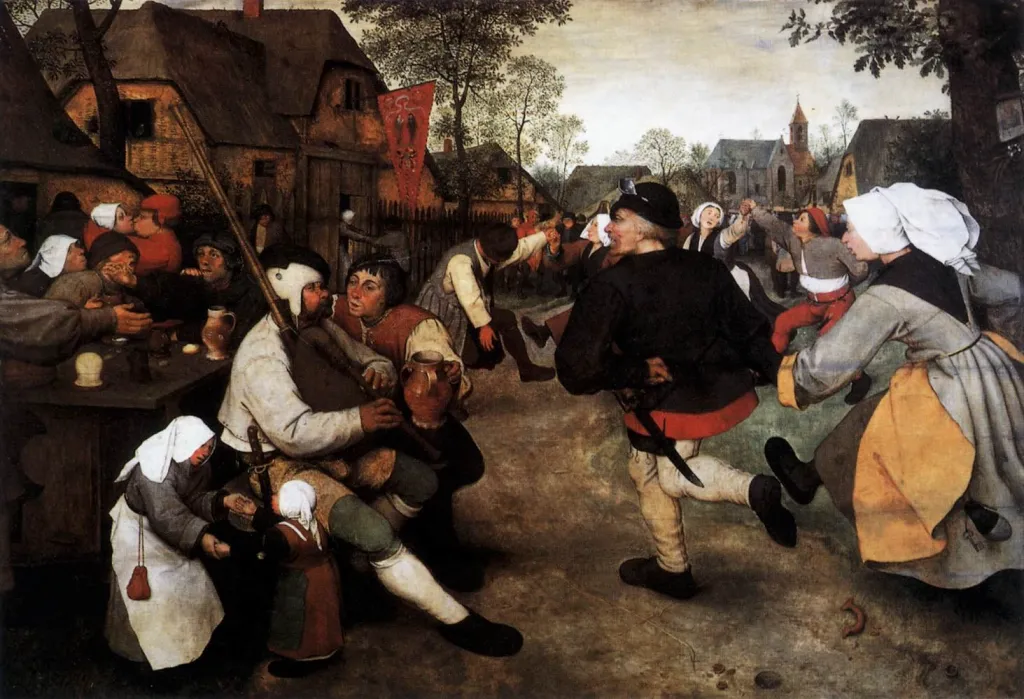
Of his over 50 recordings, one of his most iconic is of Praetorius’ dances from Terpsichore and motets from Musae Sioniae. His name will also always be associated with the foot-tapping dances of Susato – 16th-century composer, player & publisher from Antwerp (whose shop displayed the sign “In de Kroomhoorn!”) Susato’s famous Mourisque could even be said to be Munrow’s signature tune, featuring in a myriad of adaptations he made for his live performances. And it is this music we perform in the intimate setting of St Lawrence’s at Broughton where we find not only splendid 15th-century wall paintings but also a chained copy of Erasmus’s Paraphrases – re-writings of the Gospels, dating from 1517-1524.
This connection to the Netherlands inspires Fiori to meld dance music from the Low Countries made popular by Munrow with sacred pieces by Praetorius from Wolfenbüttel, near Hanover (Pied Piper country, of course!) spiced with early Italian instrumental music, in a programme entitled ‘Piping down the valleys wild’ – in deference to Munrow’s recorder-playing skills…
Then at the end of the month we migrate musically to Burgundy when on 28 June we will be giving a unique performance of DuFay’s Missa Se la face ay pale – written for the splendid Court of Savoy in the 1450s. Amongst Munrow’s many achievements was his ground-breaking 1973 recording of DuFay’s Missa Se la face ay pale. This brought vividly to life the opulent world of the House of Savoy in the mid-15th century. The popular love ballade Se la face ay pale that forms the basis of DuFay’s impressive eponymous mass was most probably written for the nuptials of Anne de Lusignan to Louis Prince of Piedmont in 1534.
Fiori will be performing both works – and performing them ‘Munrow-style’ – i.e. with the addition of copious different late renaissance instruments to enhance and contrast with the voices of the Fiori Choir. An experience not to be missed! Fiori perform this astonishing and rarely heard piece in the atmospheric, isolated church at Wolfhampcote – a place time has forgotten.
Recipe of the month
Smoked trout with dill, pumpernickel bread and fresh butter
Strawberries with mascarpone cream